A markup is a service fee that property management companies add to bills that are paid on behalf of an Owner.
If markups are already enabled in your Rentvine account, you can skip the steps below
Enabling Markups in Your Account
- Navigate to your global settings
- Under the Accounting section, click on Accounting Settings
- Navigate to the Billing section
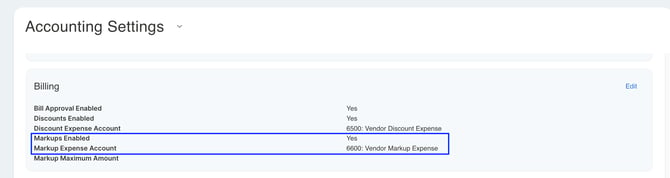
- Edit the "Vendor Markups Enabled" and set to "Yes"
- Now add the "Vendor Markup Expense Account". This is to let the system know which chart of account to use when the markup bill is automatically created.
If you do not have a Vendor Markup Expense chart of account, please get one created. To get this created, view the article attached. How to Enter a New Chart of Accounts
Marking Specific Chart of Accounts for Markups
- Once the Chart of Account is created, you will be given an option if any bills using this specific chart of account are applicable for Markups or not. To disable the specific Chart of Account from Markups, toggle off the Is Subject to Markups
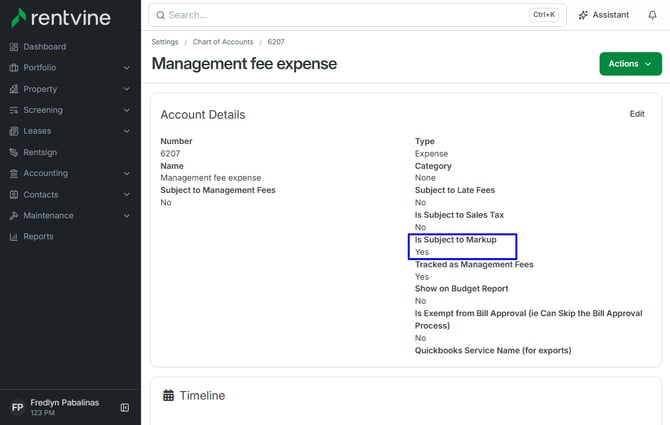
- Now that your markup settings are configured in your Rentvine account, you can get a markup added to a bill. Please note that if the steps above are not configured, the system will not let you mark up a bill.
Adding a Markup to A Bill
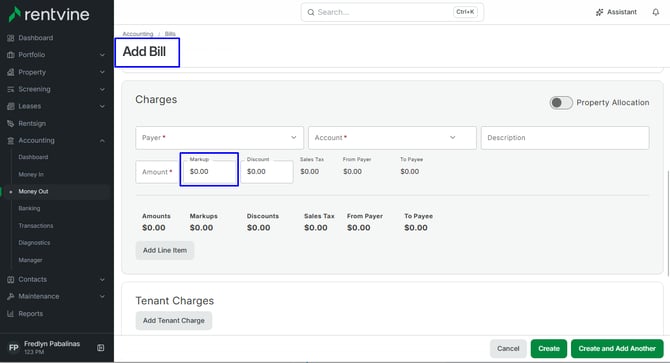
- First, you want to navigate to the "Add bill" section in the system. If you have questions on how to add a bill, please see the article on how to get a bill added in the system. How to Add, Edit, and Delete a Bill
- In the line item of every bill, you will see the markup field. Here you will be able to enter a flat amount to add a markup expense.
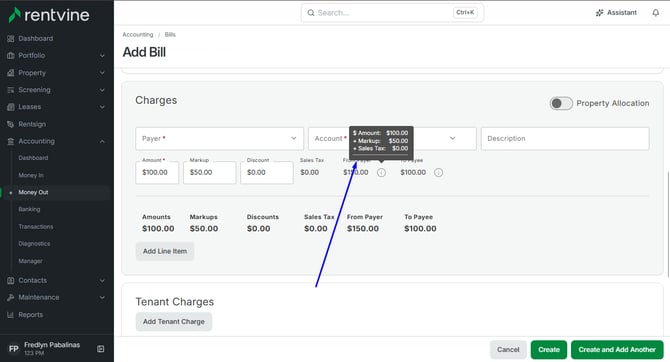
- Once all of the fields are filled out, you can hover over the 'i' icon, and this will show you a breakdown including the markup.
- In the line item of every bill, you will see the markup field. Here you will be able to enter a flat amount to add a markup expense.
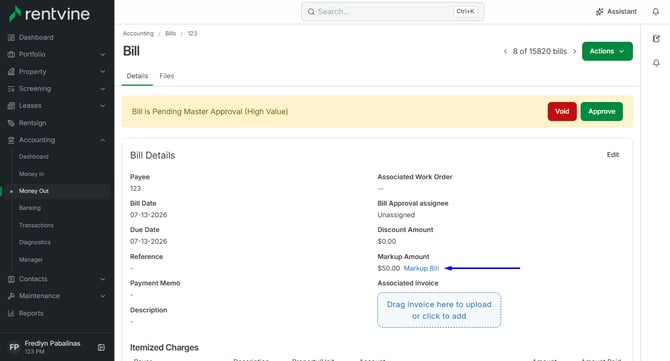
- Once you click save, the system will create the original bill that is going to the vendor and create a markup bill that will be paid to the property management company. These bills will be linked together, and you can view the markup bill or the original bill from each page by clicking the link.
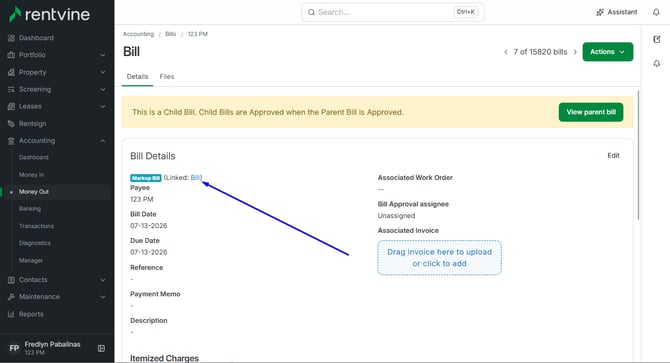
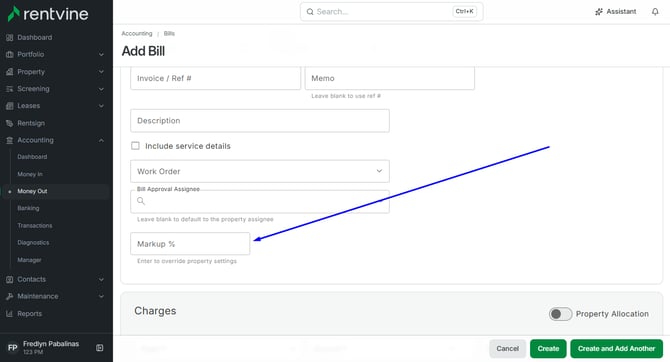
- You can also enter the markup percentage manually on the bill; this will override the property markup amount
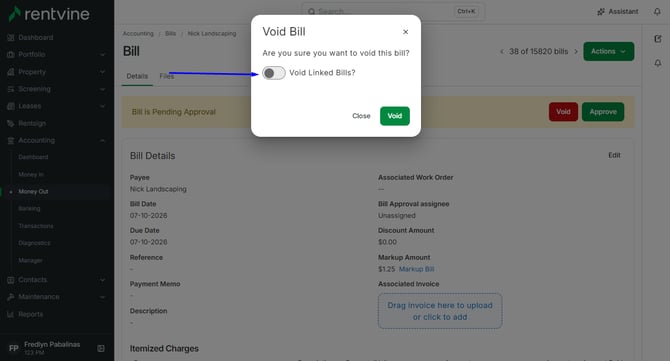
If you ever need to void a bill and a markup bill, you can click the green actions button and void one of the bills. This will give you the option to "Void Linked Bills". When this is toggled on, it will automatically void the original bill and the markup bill.
Setting a Default Markup Expense
- You can add a default markup field on the property level now to have this amount automatically pull this when creating a bill.
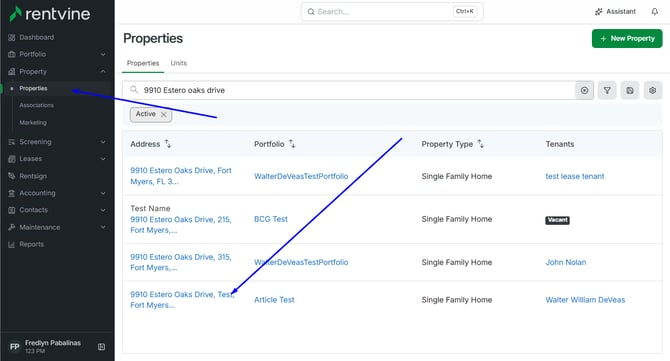
- Navigate to the property you would like to do this for first, and click on Settings
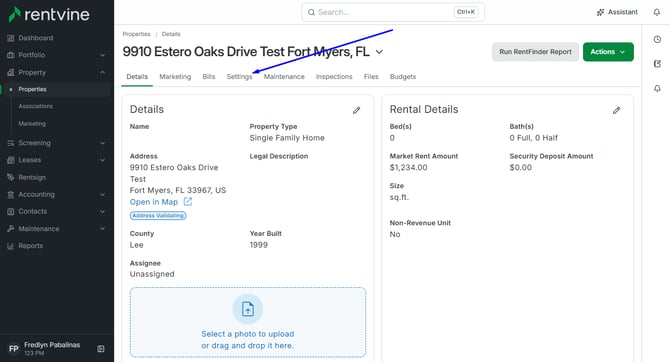
- Click the pencil icon under the Accounting Settings
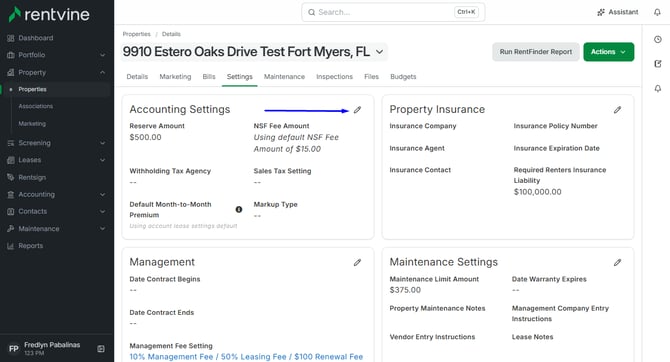
- Here you can add the markup amount so Rentvine pulls this information automatically on bills created. You can select three options, which are None, Percent, & Flat Amount
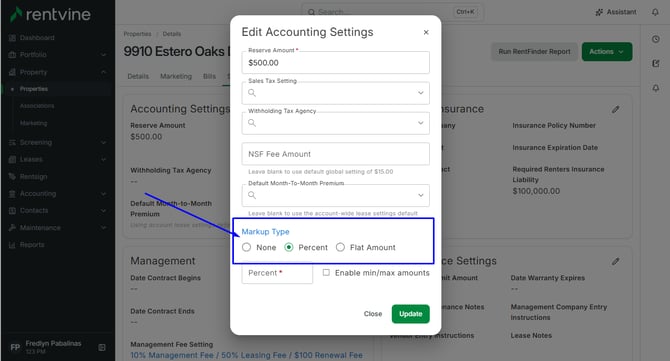
This will need to be set on every property individually to have a default markup amount.
- You can also now add a minimum/maximum amount for a markup
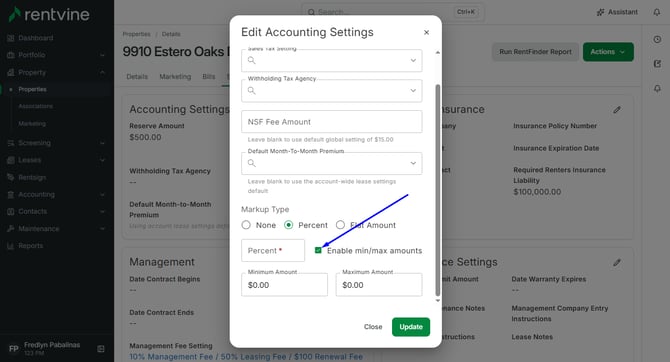
This means when creating a bill, a markup will automatically be a minimum of the amount entered, but will not go over the maximum amount.
This is only available for the percentage markup type.
Showing/Combining the Markup for Owners
If you DO NOT want the owner to see the markup bill on their owner statement, you can go to your owner statement settings and get this configured.
- Navigate to your global settings.
- Under Accounting, click Statements.
- Click on the owner statement profile you want to show/not show the markup bill on.
- Make sure "Combine Markup" is set to "Yes" if you DO NOT want the owner to see it on their statement. It will combine the total of the original paid bill and the markup paid bill on the statement.
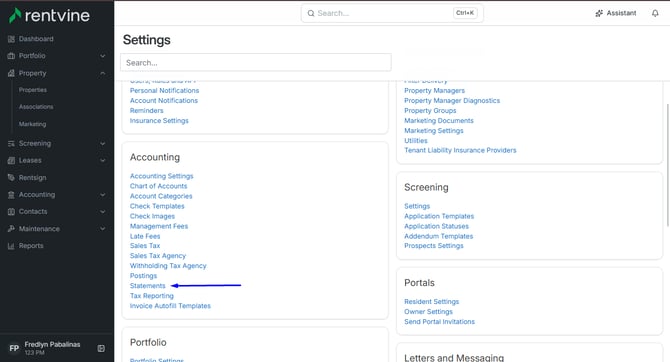
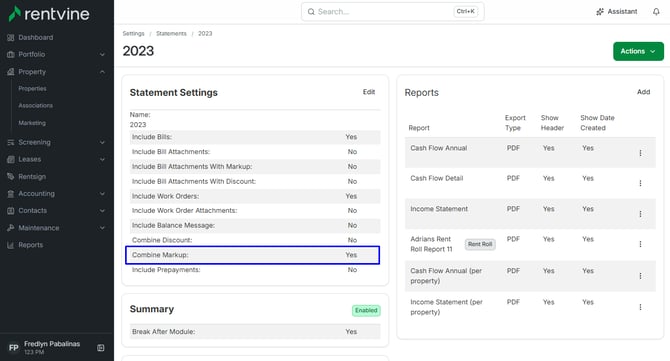
- Below is an example of how the markup will reflect on the owner statement when the "Combine Markup" toggle is set to "Yes".
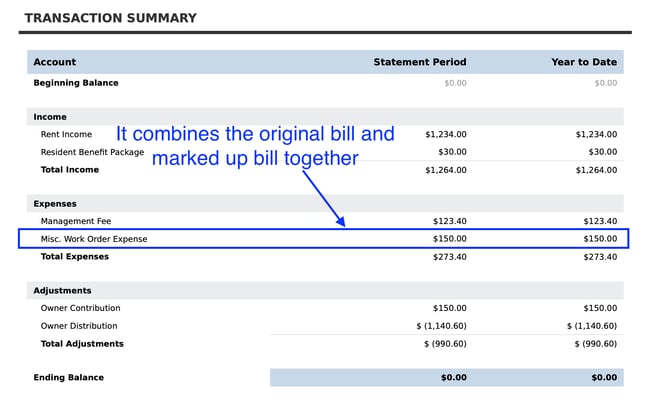
Please note that if you would like the markup to be combined when the owner views it, you will need to ensure both the original bill and the markup bill have the same payment date. The payment date is how the system knows to combine both bills together.
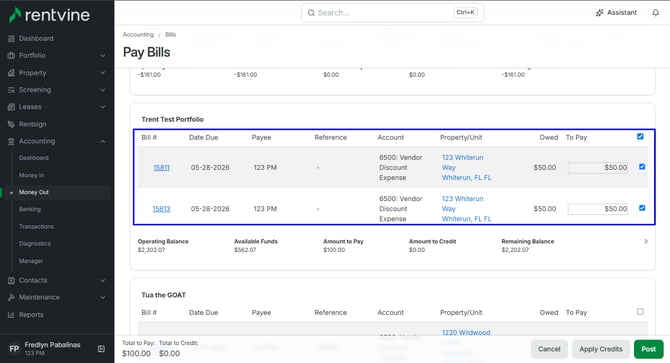
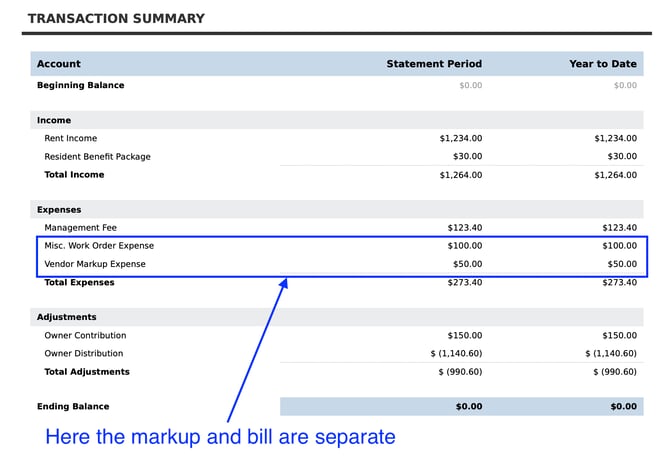
- Now, if "Combined Markup" is set to "No," it will separate the two paid bills on the owner statement. This will show the owner the bill to the vendor and the markup bill paid.
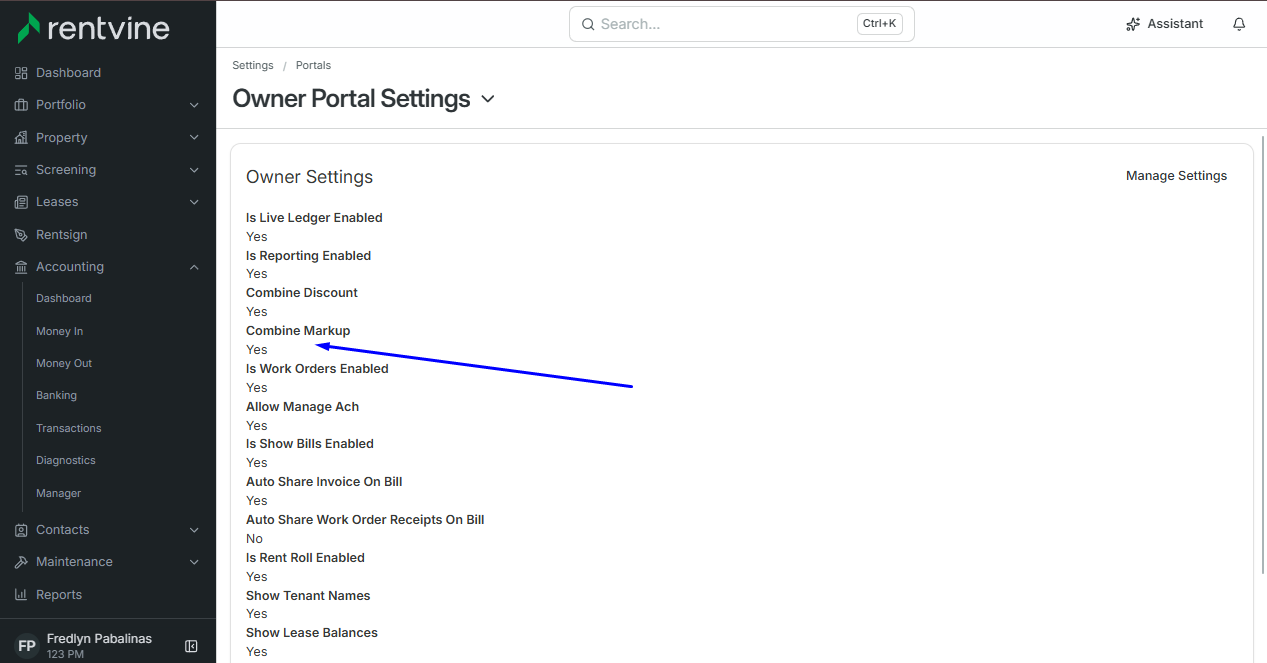
- Another section where you can combine the markup is on the owner portal. For this, you will need to navigate to the owner portal settings.
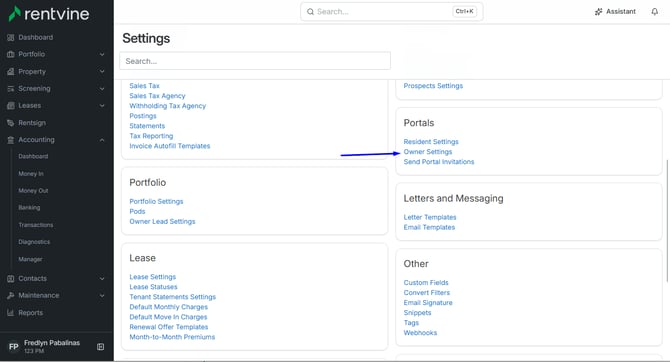
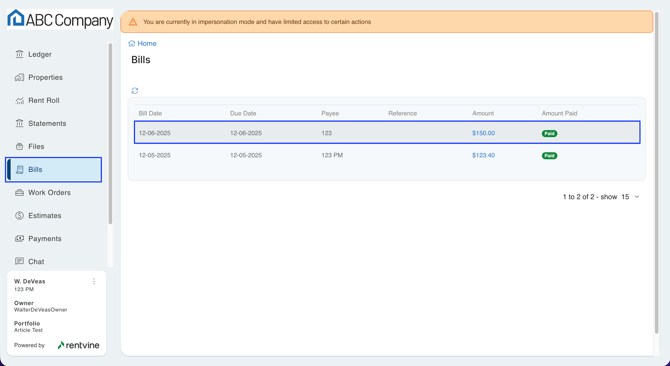
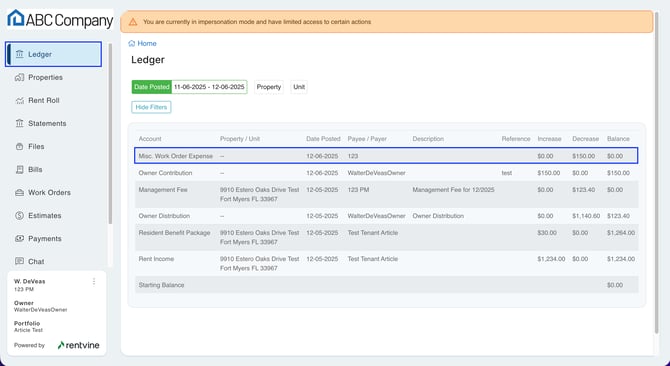
- Here you will see the option for "Combine Markup". With this toggled on, it will combine the markup on the owner's live ledger (if enabled) and under their bills section (if enabled).